

How to implement localization features in Webflow for global success
Expanding your business internationally requires more than just translation. According to Statista 2024, 76% of consumers prefer purchasing products in their native language, making localization a crucial investment for global success. Webflow’s localization capabilities offer the key feature for targeting global markets efficiently, enabling businesses to create culturally adapted experiences that resonate with local audiences. Are you ready to unlock your website’s international potential?
Understanding Webflow’s native localization capabilities
Webflow’s native localization features represent a significant step forward in the no-code website building space. The platform offers subdomain-based localization that allows you to create distinct versions of your website for different languages and regions, all managed from a single project dashboard.
Topic to read : What role does cybersecurity education play in UK schools?
The core architecture relies on locale-specific collections and conditional visibility settings. You can configure unique URLs for each language version while maintaining consistent design elements across all locales. This approach ensures that search engines properly index your multilingual content and users receive the appropriate language version based on their browser settings or manual selection.
However, Webflow’s native solution has notable limitations compared to specialized third-party tools. The platform doesn’t offer automatic translation capabilities or advanced translation management workflows. Content creators must manually translate and input text for each language version, which can become time-intensive for large websites with frequent content updates.
Additional reading : What role does cybersecurity education play in UK schools?
Third-party solutions like Weglot or Lokalise integrate seamlessly with Webflow to provide automated translation, professional translation services, and more sophisticated content management features. These tools often prove more efficient for businesses targeting multiple international markets simultaneously.
Essential steps for setting up multi-language websites with Webflow
Setting up a multi-language Webflow site requires careful planning and systematic execution. The localization feature provides a comprehensive framework for managing multiple languages, but proper configuration ensures optimal performance and user experience.
- Initial configuration: Access the localization settings in your Webflow dashboard and select your primary locale. This becomes your master language and content source for all translations.
- URL structure setup: Choose between subdirectory (/en/, /fr/) or subdomain (en.site.com) approaches. Subdirectories typically offer better SEO consolidation for most businesses.
- Domain management: Configure custom domains for each locale if using subdomains, or set up proper redirects for subdirectory structures to maintain consistent branding.
- Language parameters: Define language codes, reading directions (LTR/RTL), and currency settings for each target market to ensure proper localization.
- Content organization: Structure your CMS collections with localization in mind, planning for translated fields, locale-specific images, and region-appropriate multimedia content.
These foundational steps create a robust framework for scalable expansion into new markets while maintaining design consistency and technical performance across all language versions.
Content strategy and translation management best practices
Une stratégie de contenu multilingue efficace commence par une planification approfondie de vos besoins de localisation. Cette phase cruciale détermine quels marchés cibler, quelles langues prioriser et comment adapter votre message à chaque culture spécifique.
L’organisation de vos contenus sources devient fondamentale avant toute traduction. Centralisez vos textes, images et éléments graphiques dans un système de gestion documentaire clair. Cette approche facilite grandement le travail des traducteurs et garantit une cohérence globale de votre communication.
Le workflow de validation mérite une attention particulière. Établissez un processus de relecture impliquant des locuteurs natifs pour chaque langue cible. Ces validations doivent porter sur la justesse linguistique mais aussi sur l’adaptation culturelle des messages et des visuels utilisés.
La maintenance du contenu localisé représente un défi permanent. Synchronisez les mises à jour entre toutes vos versions linguistiques et documentez chaque modification pour maintenir la cohérence de votre écosystème multilingue dans le temps.
Technical considerations for optimal international accessibility
The technical foundation of international website accessibility extends far beyond basic translation. Performance optimization for global audiences requires careful attention to server response times, content delivery networks, and mobile compatibility across diverse network conditions. Modern international sites must deliver consistent user experiences whether accessed from high-speed networks in urban areas or slower connections in emerging markets.
Search engine optimization for multilingual websites demands precise implementation of hreflang attributes to prevent content duplication penalties. Each language version needs its own optimized sitemap structure, with clear hierarchical organization that search engines can crawl efficiently. The technical architecture must support automatic language detection while allowing manual user preferences to override system defaults.
Mobile optimization becomes particularly critical for international accessibility, as mobile device usage varies dramatically across global markets. Touch interfaces, screen sizes, and input methods require adaptive design approaches that maintain functionality across different device capabilities. Loading speed optimization through image compression, efficient code minification, and strategic caching ensures universal accessibility regardless of local infrastructure limitations.
Measuring success and optimizing your localized Webflow presence
Measuring the effectiveness of your localized Webflow site requires tracking region-specific metrics that go beyond standard analytics. Geographic traffic distribution, conversion rates by language version, and user engagement across different cultural contexts provide crucial insights into your international performance.
Google Analytics 4 offers robust multilingual tracking capabilities when properly configured with language and region parameters. Heat mapping tools like Hotjar reveal how users from different cultures interact with your localized content, highlighting potential navigation or design improvements needed for specific markets.
Cross-cultural A/B testing becomes essential for optimization. Testing different call-to-action buttons, color schemes, or page layouts across various localized versions helps identify what resonates best with each target audience. The results often surprise developers, as what works in one culture may fail completely in another.
Continuous optimization should focus on page load speeds in different regions, local search rankings, and conversion funnel performance by language. Regular content audits ensure translations remain accurate and culturally relevant as your business evolves, maintaining the quality that drives international success.
Common challenges and expert solutions
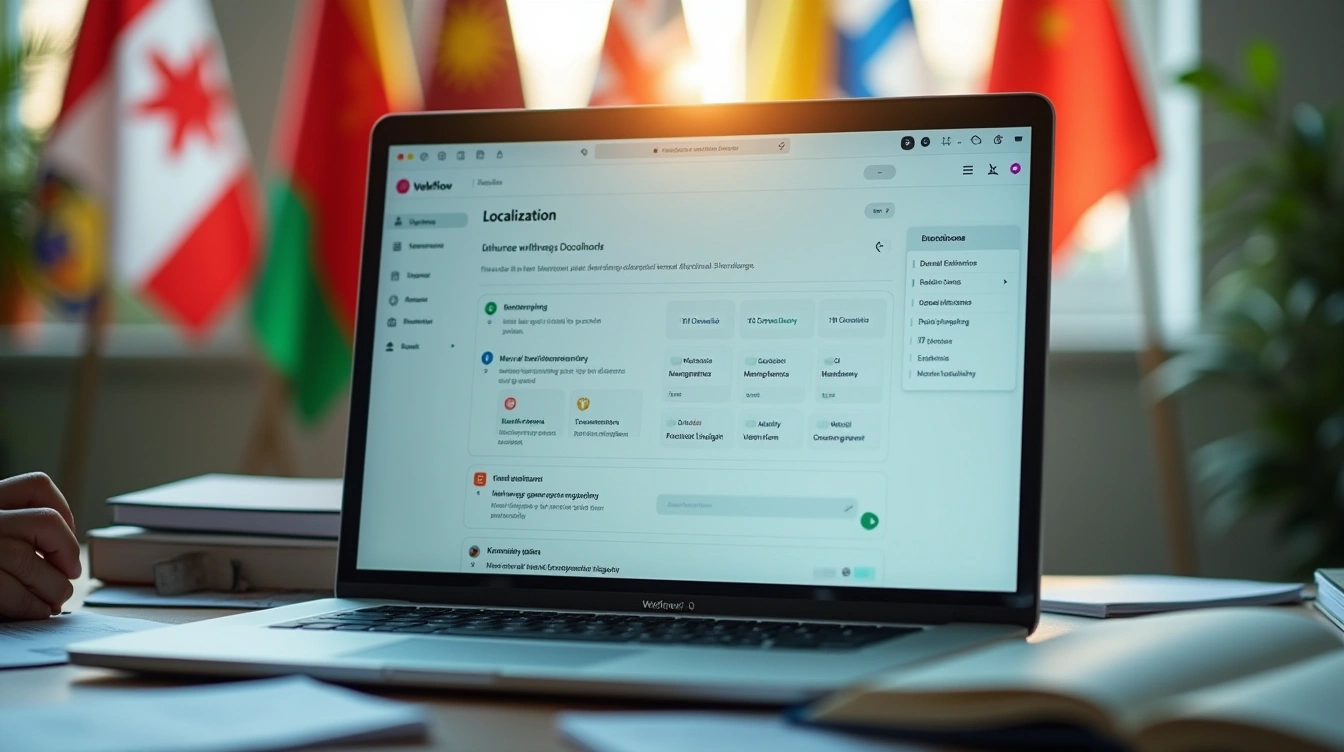
Multi-language implementations often reveal unexpected technical hurdles that can derail project timelines. The most frequent challenge involves URL structure conflicts where subdomains clash with existing SEO strategies, particularly when migrating from single-language sites. Many teams discover too late that their chosen approach doesn’t support proper hreflang implementation.
Content overflow represents another critical issue. Text expansion in languages like German or Finnish can break carefully designed layouts, while right-to-left languages require complete interface restructuring. Expert solutions include implementing flexible grid systems early and establishing content length guidelines for each target language during the planning phase.
The most effective approach combines technical preparation with strategic foresight. Successful projects establish robust fallback mechanisms for missing translations and implement comprehensive testing across different language versions. This proactive methodology prevents costly redesigns and ensures consistent user experiences regardless of the chosen language or region.
Frequently asked questions about Webflow localization
Webflow localization often raises technical questions about implementation and best practices. These answers address the most common concerns from developers and business owners looking to expand internationally.
How do I set up multiple languages on my Webflow website?
Access your project settings, navigate to the Localization tab, and add your target locales. Configure your primary locale first, then create translation workflows for additional languages through the Designer interface.
What are the best practices for localizing a Webflow site for different countries?
Plan your content structure early, use locale-specific URLs, adapt imagery and colors for cultural preferences, and test thoroughly. Consider currency, date formats, and legal requirements for each target market.
Can Webflow handle automatic translation and content localization?
Webflow doesn’t provide automatic translation. You’ll need manual translation or third-party services like Weglot. The platform focuses on content management rather than automated translation features.
How much does it cost to add localization features to a Webflow project?
Localization is included in Webflow’s CMS plan ($23/month). Additional costs include translation services, which vary by content volume and language pairs. Budget approximately $0.10-0.30 per word for professional translation.
What’s the difference between Webflow localization and using third-party translation tools?
Webflow localization offers native content management with SEO benefits, while third-party tools provide automatic translation but may impact site performance and search rankings. Choose based on quality versus convenience needs.
Do you offer technical support services for Webflow localization implementation?
Yes, we provide comprehensive localization setup services, from initial configuration to ongoing maintenance. Our team handles technical implementation, workflow optimization, and integration with translation management systems for seamless international expansion.